26 - 27 November 2026 | Samarkand, Uzbekistan (Hybrid Mode)
Welcome to International Conference on Elevating Lives and Combating Poverty in the Digital Economy
In recent years, the leadership of the Central Asian countries has embarked on a noteworthy journey of systematic reforms aimed at catalyzing economic growth and enriching the quality of life for their citizens. Central to these transformative efforts is the ambitious transition to a digital economy, viewed as a strategic priority that runs in parallel with crucial initiatives focused on poverty alleviation and enhancing overall societal well-being. A significant illustration of this commitment can be found in the Decree of the President of Uzbekistan, numbered DP-6079, which is entitled “On Approval of the Strategy ‘Digital Uzbekistan – 2030.’” This decree highlights the urgent need to advance digital technologies, branding them as essential drivers for achieving sustainable economic development. It outlines how establishing robust digital infrastructure will not only foster a more resilient national economy but also promote social equity and raise living standards across diverse segments of society. Further reinforcing this bold vision, the Decree DP-60, which describes the “Development Strategy of New Uzbekistan,” along with the overarching “Uzbekistan – 2030” Strategy (No. RP-158), sets forth a series of ambitious goals. Notably, these objectives include a marked reduction in poverty by 2026, an increase in citizens’ real incomes, and a substantial increase in the digital economy's contribution to the nation's wealth. The decree underscores the transformative potential of digital technology, stating that "digital transformation serves as a new engine of economic growth," highlighting its role as a pivotal factor in developing human capital, establishing a fair social protection framework, and promoting overall societal well-being. Moreover, the adoption of Resolution No. RP-3832, titled “On Measures for the Development of the Digital Economy,” has established a structured framework for the modernization of digital infrastructure. Together with various resolutions issued by the Cabinet of Ministers, these initiatives aim to integrate digitalization across all sectors of the economy—including social protection, employment, entrepreneurship, and education—thereby enhancing living standards and tackling the pressing issue of poverty. Innovative initiatives led by the respective countries, such as “Every Family is an Entrepreneur,” “Women’s Notebook,” and “Youth Notebook,” utilize advanced digital monitoring systems to conduct comprehensive analyses of the social circumstances affecting citizens. This data-driven approach facilitates the creation of targeted assistance programs designed to bolster employment opportunities and alleviate poverty. The groundwork laid by these programs has been pivotal in fostering inclusive economic growth and prosperity. In addition, supplementary programs like the “National Strategy for Social Protection,” the “Strategy for Transition to a Green Economy,” and initiatives such as IT-Park, Millions of Central Asian Coders, and “Digital Skills” have significantly raised the profile of the digital economy in advancing social support frameworks and enhancing the overall well-being of the population. The strategic objectives articulated in these legal documents and state programs highlight the pressing need for comprehensive scientific and practical research. The papers expected to be presented at the upcoming conference will delve into the critical role of the digital economy in poverty alleviation, assess the economic and social effectiveness of ongoing digital transformation efforts, and propose innovative strategies to further improve the quality of life for citizens in these nations.
Scientific Direction, Goals, and Objectives of the Conference.
In an era marked by globalization and rapid digital transformation, the pervasive integration of digital technologies has become a crucial strategy for fostering economic development, promoting social stability, and enhancing the overall well-being of populations across countries. The emergence of a digital economy in Central Asia is not merely boosting economic efficiency; it is also catalyzing significant shifts across multiple sectors, including employment, social protection, education, healthcare, and public services. Given this context, the forthcoming scientific conference will delve into a range of compelling topics, focusing on the theoretical foundations, practical applications, and societal implications of the digital economy, particularly its potential to alleviate poverty—an issue more pressing than ever. It is essential to recognize that implementing a digital economy transcends mere technological upgrades; it entails multifaceted processes that demand a paradigm shift in economic thinking, shifts in employment models, advances in public administration, and innovative social policies. The primary scientific focus of the conference will revolve around the analysis and discussion of contemporary, innovative, and digital mechanisms that could be harnessed to combat poverty effectively. The in-depth examination of poverty alongside the pursuit of science-based solutions remains one of the government's foremost priorities. Though numerous studies have investigated the social implications of the digital economy, the prevailing academic discourse has primarily concentrated on technological advancements, e-government functionalities, and digital services. What remains underexplored is the direct influence of the digital economy on alleviating poverty and the specific mechanisms that contribute to this process—such as income enhancement, job creation, targeted social protection, and improved access to educational and healthcare services—have yet to receive comprehensive scientific scrutiny. Existing approaches to addressing poverty may require a significant overhaul in light of current digital transformations. Traditional models of poverty reduction—emphasizing employment, social assistance, and entrepreneurship support—have generally been analyzed without incorporating digital tools. They have failed to account for the transformative impact of digitalization, including avenues for generating income through electronic information systems and digital platforms. Consequently, this conference aims to provide an insightful scientific analysis of various pressing issues, including the novel methodological approaches introduced by the digital economy in the fight against poverty, the identification of digital indicators, the dynamics of digital inequality, the implications of artificial intelligence on the labor market, and the evolution of employment within the platform economy. The overarching goal of the conference is to provide a robust scientific and theoretical foundation for understanding the role of the digital economy in reducing poverty and enhancing the welfare of the population in Central Asia. This includes a thorough examination of the critical priorities outlined in state policy and the development of actionable proposals to enhance their effectiveness in real-world applications. The specific objectives of the conference encompass the following: - A systematic exploration of the theoretical and methodological frameworks underpinning the digital economy, with an emphasis on uncovering the mechanisms through which it influences economic growth and enhances living standards. - A scientific investigation into the current manifestations of poverty, the persistence of digital inequality, the introduction of digital social protection models, and the innovative digital tools that have the potential to elevate the quality of life for citizens. - The establishment of well-founded concepts such as “digital social protection,” “digital employment,” and “smart economic management” based on directives outlined in presidential decrees and resolutions. - An analysis of the opportunities available for generating new income sources through various digital platforms, including freelance work, e-commerce, fintech, edtech, and others. - An assessment of the role played by advanced technologies—such as artificial intelligence, big data, and blockchain—in combating poverty while providing well-researched conclusions about their social repercussions. - A thorough evaluation of the impact of the digital economy across different regions, supported by scientific proposals aimed at bridging the digital divide that persists among these areas. - A scientific endorsement of the necessity to enhance the qualifications and digital skills of the populace during the course of digital transformation, which is critical for developing human capital. - A comparative analysis of experiences related to methodologies, along with a demonstration of the potential to develop a customized national model.
Venue
Samarkand State University named after Sharof Rashidov, Samarkand city, University Avenue 15.
+998905021303 Telegram, WhatsApp.
email: ikromnasimov2020@gmail.com
Important Dates
Keynote / Invited Speakers

Vasa Laszlo
Professor
Széchenyi István University Győr
Hungary

Chen Zhuo
Director of the Strategy Research Department
China Population and Development Research Center
China

Zhou Zhongliang
Professor, Dean
School of Public Policy and Administration, Xi'an Jiaotong University
China

Yang Xueyan
Director and Professor of Institute for Population and Development Studies
Xi’an Jiaotong University
China

Jie Li
Professor
Sian Jiaotoung University
Sian, China

Jorn Dosch
Professor
Rostock University
Rostock, Germany

Hosen Mosharrof
Professor
Taylors University
Subang Jaya, Malaysia

Gagan Deep Sharma
Professor
Széchenyi István University Győr
Hungary
Proceedings Publication
Papers selected for publication will undergo a meticulous review process conducted by the conference organizers and publishers. Only those submissions that meet the high academic standards will be included in the esteemed Scopus-indexed proceedings series, Springer Proceedings in Business and Economics. This publication not only enhances the visibility of researchers' work but also promotes scholarly dialogue and collaboration within the business and economics community, allowing innovative ideas and findings to reach a global audience.
Acknowledgement
The Microsoft CMT service was used for managing the peer-reviewing process for this conference. This service was provided for free by Microsoft and they bore all expenses, including costs for Azure cloud services as well as for software development and support.
About Samarkand

Samarkand is one of the oldest and most beautiful city in Central Asia, located in Central Uzbekistan. Known as the “Pearl of the Silk Road,” it has a history of more than 2,700 years and has been a major center of science, culture, and trade. The city is famous for its stunning architectural monuments such as Registan Square, Gur-Emir Mausoleum, Bibi-Khanum Mosque, and Shah-i-Zinda.
Samarkand experiences a continental climate with hot, dry summers and cold winters. Rainfall is modest and mostly concentrated in spring, while summers remain largely rain-free. Temperature ranges between 12°C- 27°C during the month of May.
About University
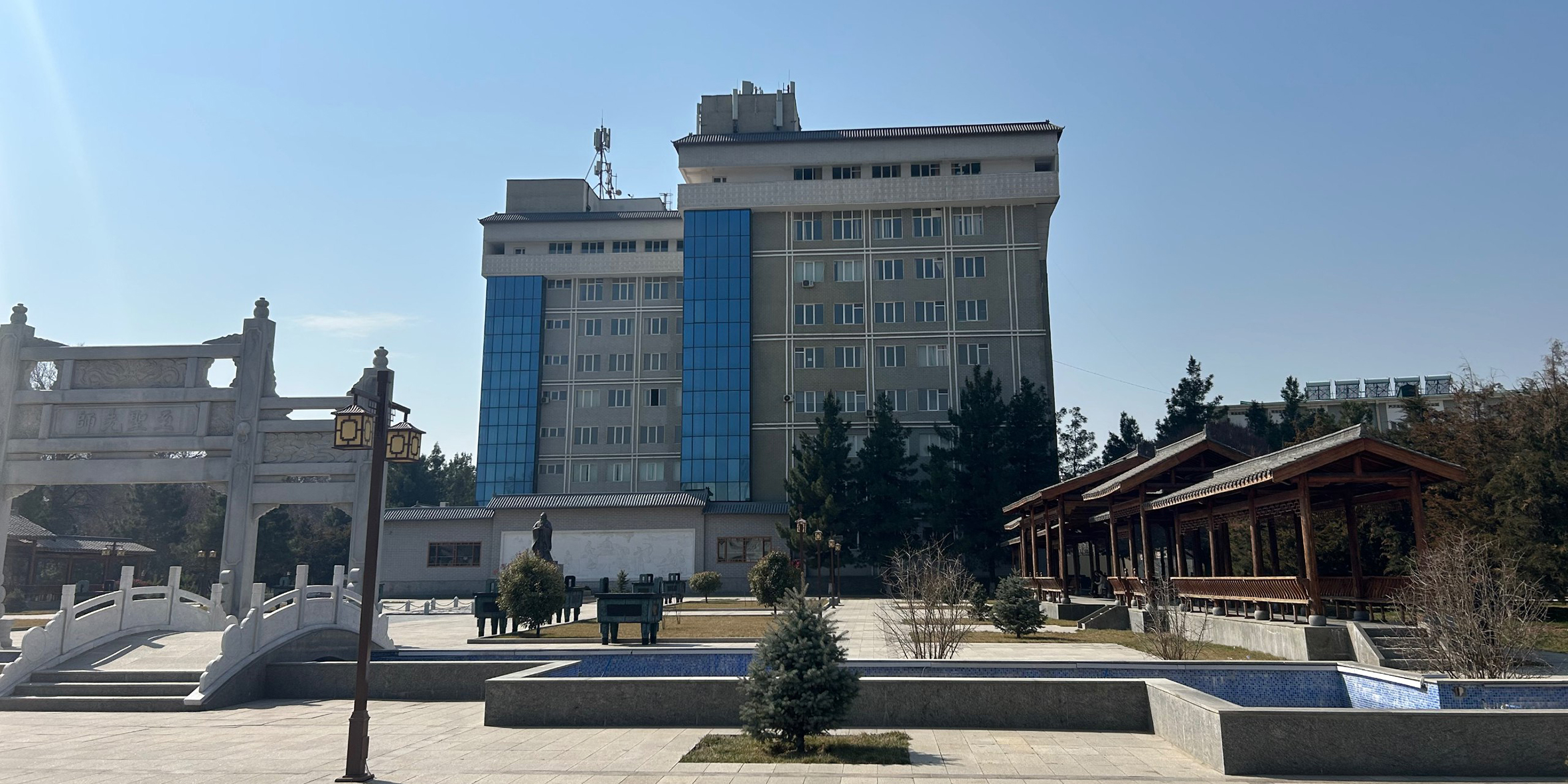
The history of Samarkand State University dates back to the Mirzo Ulugbek Madrasah, founded on September 21, 1420, where fundamental sciences were taught alongside religious studies. The madrasah operated until the 1920s and later contributed to pedagogical training during the Soviet era. Its teachers helped establish the Higher Pedagogical Institute in 1927, which evolved into the Higher Pedagogical Academy and, in 1933, the Uzbek State University. Renamed after Alisher Navoi in 1941, it was restored after World War II and became Samarkand State University in 1961. Today, named after Sharof Rashidov, it has produced many notable cultural and scientific figures.
About Institute

The Institute of Human Resources and Mahalla Development Management was established at Samarkand State University in 2023. Building on more than 30 years of academic experience, the Institute provides bachelor's, master's, and doctoral education in Economics, Digital Economy, Banking, Agribusiness, and Human Resource Management.
The Institute is committed to high-quality education, research, and international cooperation. It is home to the Human Resource Management Research Center, which conducts scientific projects, organizes international conferences, and publishes the peer-reviewed journal Human Capital and Social Development. The Institute also collaborates with leading universities and research organizations in South Korea, China, Germany, Japan, and Russia.